
24 June 2025
For over 20 years, I’ve been doing dark field live blood microscopy (LBM)—a specialized method that allows us to view living components of blood in real-time. Under the microscope, we routinely see red blood cells (RBCs), white blood cells, platelets, fibrin, and sometimes even parasites, bacteria, or viral inclusions housed inside Natural Killer Cells (NKCs). In a healthy person, that’s typically all we should see.
But for many years—long before public concerns about spike proteins, mRNA injections, or environmental pollutants like chemtrails—I began noticing strange structures in the blood. Filaments. Crystalline forms, Mesogens that looked like micro-rocks. At the time, I didn’t understand what they were. All of us trained in live blood analysis didn’t. But I see now, with a new lens and growing independent research, that we may have been witnessing early signs of self-assembling nanotechnologies.
What Is Self-Assembling Nanotechnology?
In simple terms, “self-assembling nanotechnology” refers to microscopic or nanoscale materials that organize themselves into more complex structures—sometimes forming filaments, wires, or even robot-like shapes. These can interact with biological tissue, and, from what I and others are observing, may use red blood cells as a source of energy.
Dr. Ana Mihalcea and others in the independent science community have brought attention to these findings, especially following the mass administration of mRNA-based COVID-19 vaccines and the rise in environmental contamination from multiple sources. Based on my observations, there appears to be no clear distinction between the blood of vaccinated and unvaccinated individuals—a detail that points to environmental exposure affecting everyone, not just those who received injections.
A Recent Case: 2 Weeks of Detoxing from Nanotechnology
One of my current patients (unvaccinated) has been undergoing a chelation and detox protocol for two weeks, aimed at eliminating the visible presence of these unnatural materials in the blood.
When we did a follow-up live blood microscopy test (after a 15-hour fast to eliminate dietary fats like chylomicrons), the results were clear:
The hydrogel filaments—a type of self-assembling material—had shrunk in size.
The mesogens (which look like miniature rocks or crystals) were fewer in number.
The overall blood terrain appeared cleaner and more balanced.
This is encouraging. The body is resilient when given the right tools.
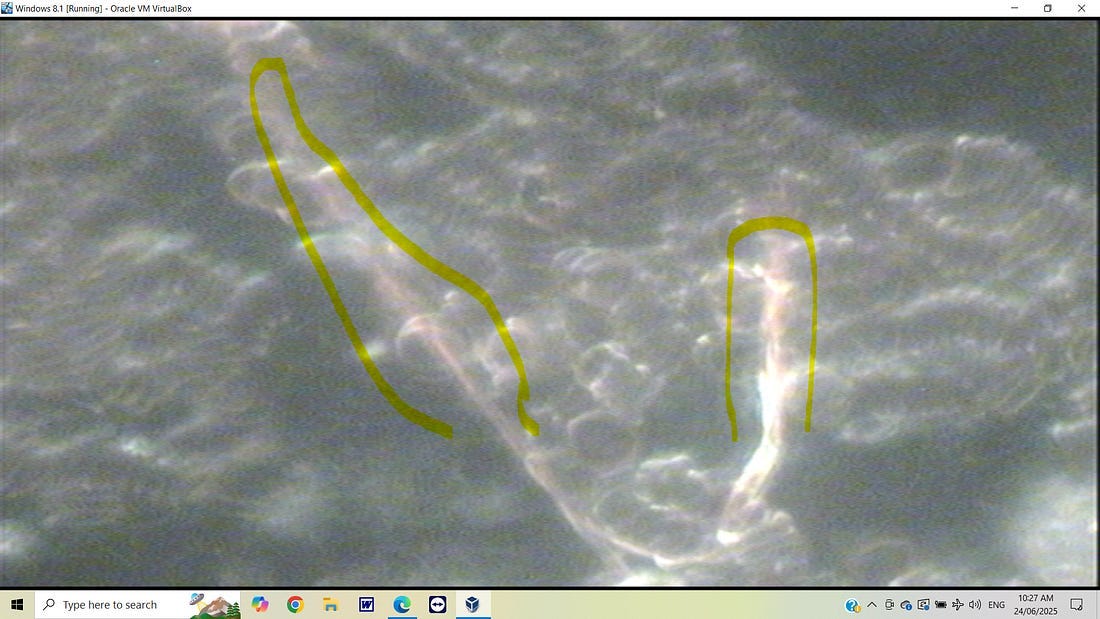
Hydrogel polymer filament seen with abnormal RBC clotting. Magnification 400x image by Danuta Hulajko
The “Nano-Robots” in the Bloodstream
But then I saw something unusual.
Among the regular blood components, I observed three distinct objects that did not behave like normal cells or particles:
One looked like a rod-shaped bacterium—but upon closer observation, it lacked any biological response or movement pattern typical of living organisms.
Two others appeared like shining star-shaped particles, reflective and geometrically regular.
Even more curious—these three objects were following one another, seemingly in coordination, as if part of a small swarm.
This behavior does not align with any known natural activity in healthy blood. I am not claiming definitive proof of synthetic nanotechnology, but these types of findings must be investigated with open minds and rigorous honesty.
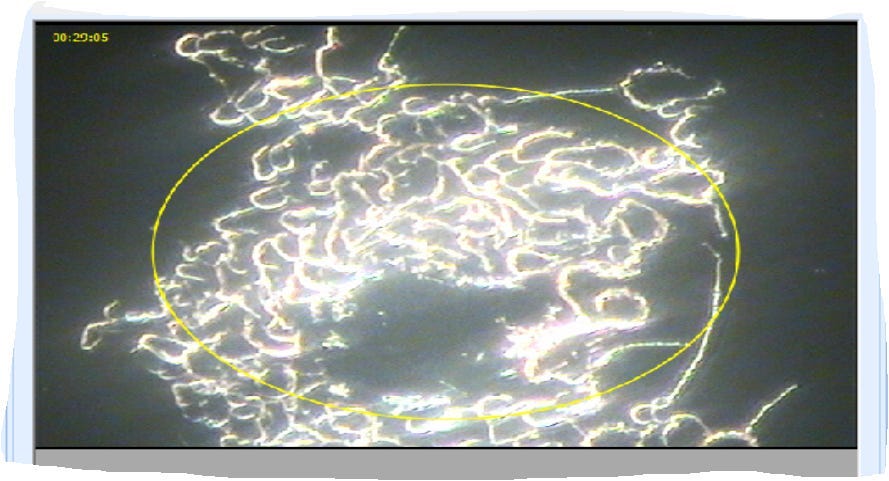
Self-assembling microchips, Magnification 400x, image by Danuta Hulajko
Why This Matters
Many people are feeling fatigued, foggy, or unwell—without clear cause. While there are many potential factors, the presence of environmentally introduced nano-materials in our bloodstream must be part of the conversation. Whether introduced through air, water, food, or medical interventions, these materials appear to interact with our blood in ways we’re only beginning to understand.
And while mainstream science may not yet acknowledge these findings, that doesn’t make them less real for those of us seeing them firsthand. Science begins with observation. As more practitioners speak out and share what they see, a clearer picture will emerge.
Final Thoughts
I share this not to alarm, but to inform and empower. The more we understand what is happening inside our own bodies, the more proactive we can be in supporting our health. Detox protocols, and awareness of environmental exposures can all play a role in helping the body return to balance.
I will continue documenting and sharing these findings as part of my ongoing commitment to transparent, evidence-based wellness.
If you're interested in this topic or want to learn more about what I’m seeing under the microscope, feel free to subscribe, comment, or reach out.
Stay curious. Stay well.